
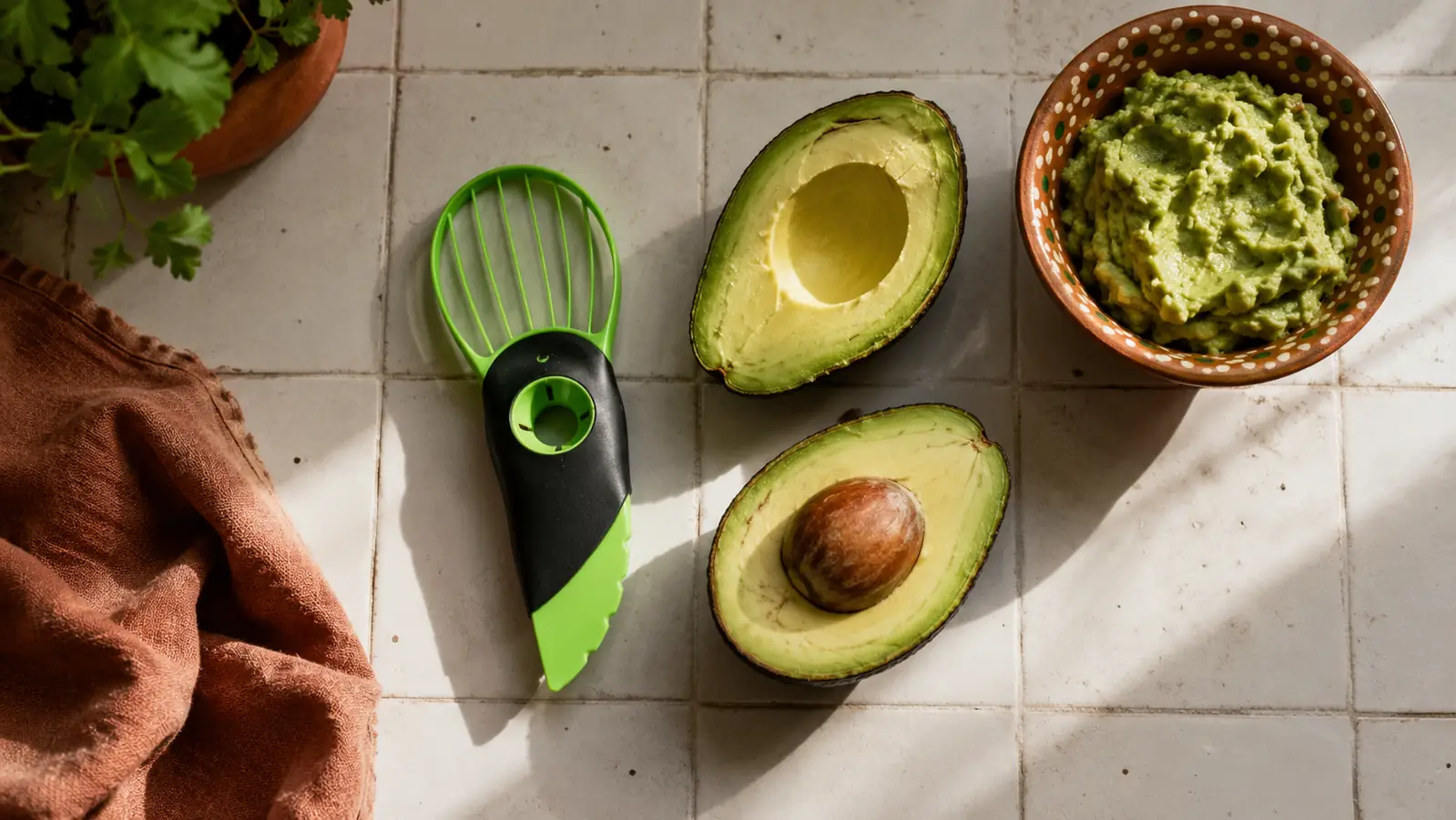
Every review I read before buying this thing said basically the same sentence: "Best kitchen tool I've ever bought, changed my life." That's not a review, that's a form letter. I bought the NADOBA 3-in-1 avocado tool anyway, mostly because it was budget-priced and I figured worst case I'm out the price of a coffee. I've now used it on somewhere north of 60 avocados over about ten weeks, for guac, toast, salads, and one very ambitious attempt at avocado deviled eggs that did not go as planned. This is the review I wish I'd found before I bought it, the one that tells you where it actually falls short instead of just repeating "changed my life" for the tenth time.
I'm not a chef. I cook dinner most nights for my family, I buy avocados by the bag from Costco when they're in season, and I have exactly zero patience for gadgets that overpromise and take up drawer space I don't have. So here's the version with the hype stripped out, written by someone who actually had to clean this thing after a Tuesday night taco dinner and figure out if it was worth keeping around.
The Quick Verdict
Genuinely useful for the slicing and scooping, mediocre and honestly a little risky for pitting. Buy it for the parts it's good at, don't expect it to replace a knife entirely.
Amazon Check Today's Price →Skip the guesswork and see today's price
This is the exact NADOBA 3-in-1 tool I tested for ten weeks. Current pricing and availability on Amazon below.
Amazon Check Today's Price on Amazon →How I Tested It
No lab, no stopwatch spreadsheet, just real use. I kept the tool in the same drawer as my knives for ten weeks and used it instead of a knife every time I touched an avocado, which in my house is roughly four to five times a week between guacamole, avocado toast for my daughter's lunches, and the occasional Cobb salad. I also handed it to my husband, who is left-handed and skeptical of gadgets on principle, to see if the grip and blade orientation worked for him too. He used it about a dozen times over the test period and had mostly the same experience I did, which told me this wasn't just a fluke of my own grip or habits.
I tracked three things that actually matter to a home cook: does it save time over a knife, does it hold up physically, and does it do what the packaging claims (slice, pit, scoop, in that order, since that's the order printed right on the card backing). I did not track things like "aesthetic on my counter" because nobody's buying a budget plastic tool for that, and I didn't bother timing myself to the second either, because in real kitchen life nobody actually cares if something takes 38 seconds instead of 45.
One thing I want to flag up front, because it colors everything else in this review: I bought this at full retail price with my own money specifically to write an unbiased review. Nobody sent it to me, and nobody is paying me to say nice things about it. That matters when half the reviews on the product page read like they were written by someone who got it for free in exchange for five stars, which is a pattern you start to notice once you've read enough Amazon reviews for cheap kitchen gadgets.
The Blade Edge: Actually Good
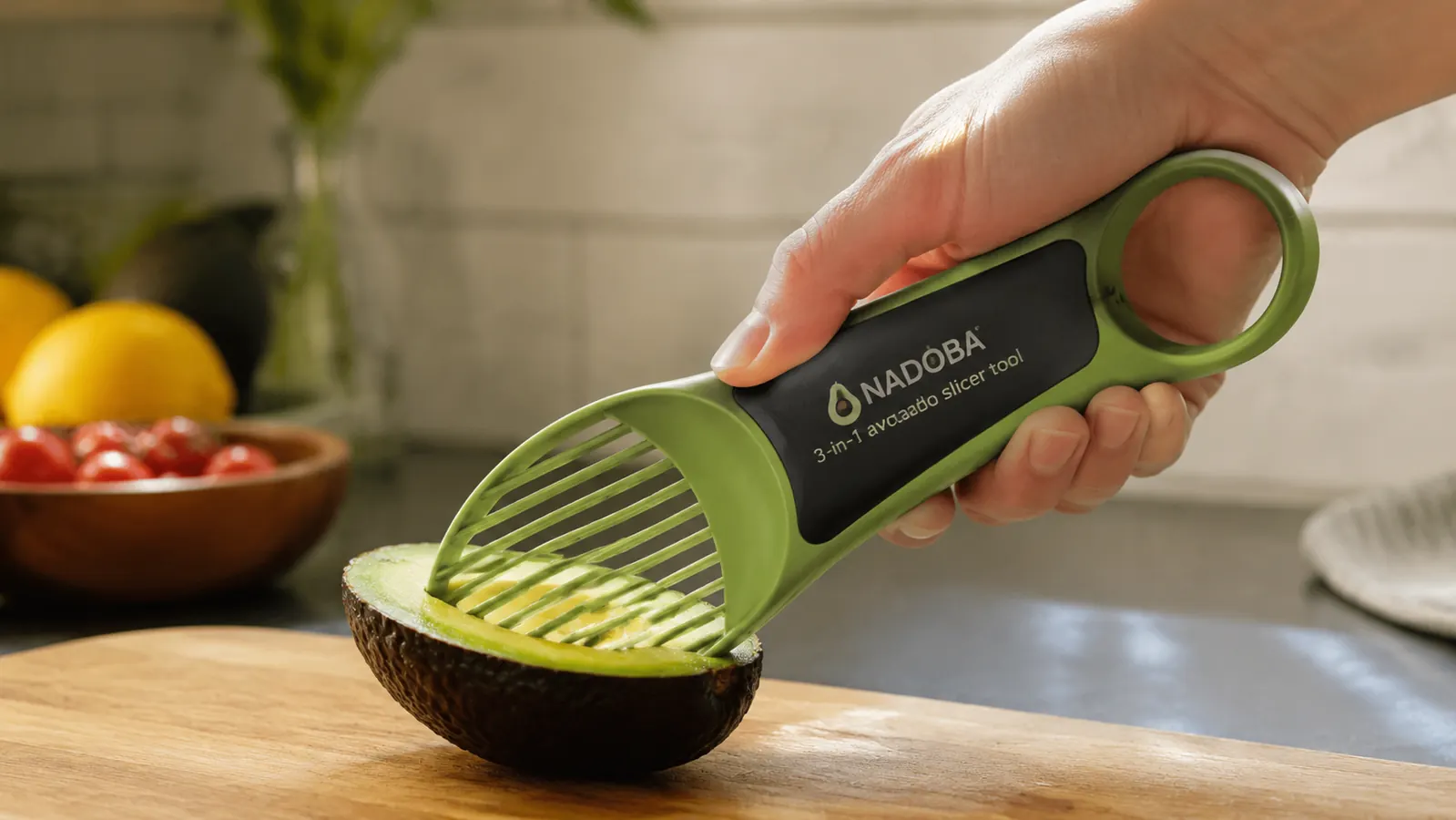
The slicing edge is the strongest part of this tool by a wide margin, and it's the reason I keep reaching for it. You cut the avocado in half the normal way with a knife first, then drag the tool's serrated-ish plastic blade through the flesh while it's still sitting in the skin. It cuts clean, even slices without the flesh sticking to a metal blade the way it does with my chef's knife, which normally means I'm scraping avocado off both sides of the blade with my finger halfway through.
For avocado toast, where I want thin, even fans of avocado laid across the bread for my daughter's lunch, this is faster than doing it by hand with a spoon and knife. It's also faster than my old method of scoring the flesh in a crosshatch pattern inside the skin, which always left a few chunks uneven. This tool makes uniform slices almost every time on a ripe avocado, and that consistency alone is worth something if you're plating for guests or trying to make lunch look halfway decent for a kid who judges food by how it looks.
It's plastic, so don't expect knife-sharp precision on a rock-hard, underripe avocado. On a properly ripe one, the kind that gives slightly under thumb pressure, it glides through in one pass. On an avocado that's still a day or two from ready, you'll fight it, and you might crush more than you slice. I learned this the hard way on a Sunday when I grabbed one straight from the fruit bowl without checking ripeness first, and ended up with mangled chunks instead of slices.
The Scoop End: Solid, Not Revolutionary
The curved scoop end works like you'd expect a slightly-better-than-a-spoon tool to work. It hugs the inside of the avocado skin well enough to get most of the flesh out in one clean motion, which does save a little cleanup compared to a spoon that leaves green streaks scraped halfway up the skin. It's not magic. On very soft, overripe avocados it can tear the flesh a bit rather than scooping cleanly, and you'll still end up running a butter knife along the edges to get every last bit, especially near the stem end where the flesh tends to cling harder to the skin.
For guacamole specifically, this is the part of the tool I use the most, since I'm not being precious about clean slices anyway and just want the flesh out of the skin fast. It genuinely does that faster than a spoon, maybe by ten or fifteen seconds per avocado, which sounds small until you're doing six avocados for a Sunday football gathering and that adds up to a minute or two saved.
The Pit Remover: Where the 5-Star Reviews Go Quiet
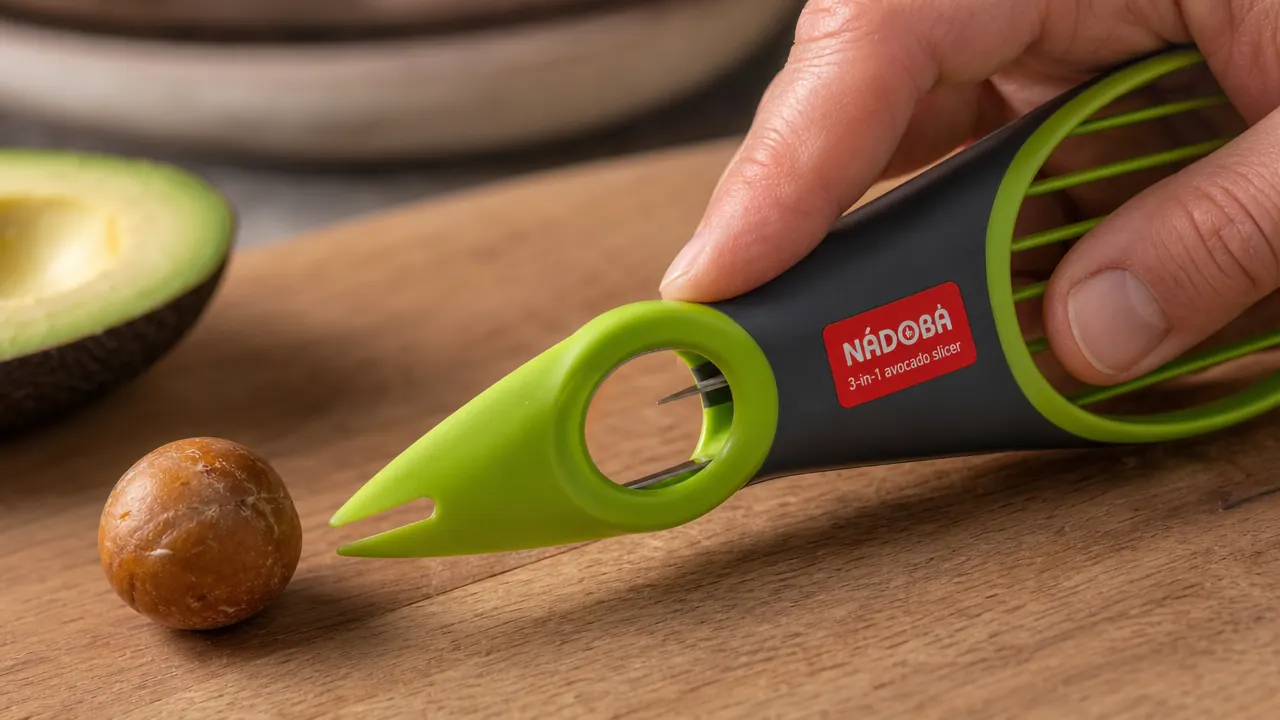
This is the part nobody warns you about, and it's the reason I'm not giving this tool a full five stars. The pointed end is supposed to stab into the pit and let you twist it out with a flick of the wrist. In practice, it works maybe two out of three times on a properly ripe avocado. On anything slightly underripe, the pit is stubborn and you end up pressing harder than feels safe for a plastic tool, worried it's going to snap or slip out from under your thumb.
It hasn't snapped on me in ten weeks, to be fair. But I have had it slip off the pit once and skid across the flesh, which is a small thing but it's exactly the kind of moment the product is supposed to prevent you from having. I still keep the classic knife-heel-in-the-pit trick as my backup, and honestly for pitting alone I'd call it a coin flip whether the tool or the knife trick is faster on any given avocado. Some weeks the pit remover nails it every time. Other weeks I'm stabbing at the same pit three or four times before it finally catches.
I want to be fair here: this doesn't mean the pit remover is dangerous the way a chef's knife slipping off a pit can be, which is a real and common kitchen injury. It's just inconsistent, and inconsistent isn't what the packaging promises when it says "quick food prep" right on the front.
Build Quality Over Time
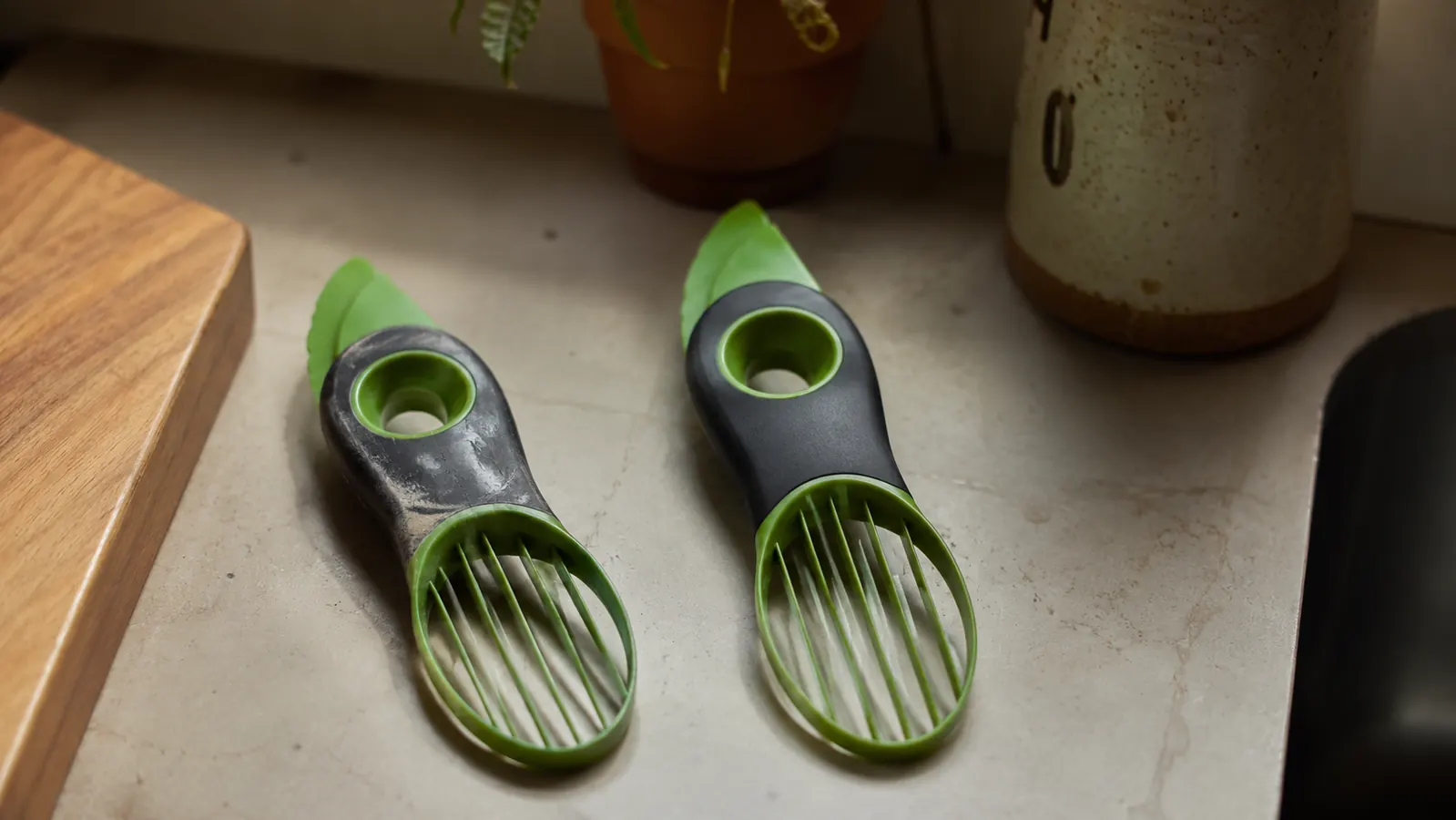
It's food-grade plastic, and it feels like it. Not flimsy, but not the sturdy heft of something like a metal-core spatula either. After about eight weeks of near-daily use, mine developed a faint scuff pattern on the slicing edge where it's clearly softened just slightly, and the pit-remover point has a barely-there flex to it now that it didn't have on day one. It still works. I just don't think it's a ten-year tool. I'd guess a realistic lifespan of one to two years of regular use before the edge dulls enough to notice a real difference in slicing quality.
It's dishwasher-safe according to the packaging, and I ran it through the top rack a handful of times with no warping. I still mostly hand-wash it because avocado residue in the pit-remover groove is annoying to fully rinse out in a dishwasher cycle, and a quick rinse under the tap takes ten seconds, less time than it would take to load it into the dishwasher rack anyway.
Comparing It to the Dollar-Store Version I Also Own
I actually already owned a similar-looking avocado tool from a dollar store, bought on a whim two years ago, so I put the two side by side out of curiosity. The dollar-store version has a stiffer, more brittle plastic that I was always nervous would crack under pressure, and its pit remover barely worked from day one. The NADOBA tool feels noticeably more solid in the hand, the grip has a slight contour that actually matches how your fingers naturally wrap around it, and the slicing edge holds up better over time. So if your only frame of reference is a bargain-bin version, this is a real step up. It's just not the flawless miracle tool the five-star reviews make it sound like.
The Price-to-Value Math
At under six dollars, the bar for "worth it" is genuinely low, and this clears it. Even if you only use the slicing edge and never touch the pit remover again, you've gotten your money's worth within the first few uses. Compare that to some of the fancier avocado tools running fifteen to twenty dollars with extra attachments I don't think most home cooks need, like built-in mashers or measuring guides. Those solve problems most of us don't actually have, and they take up more drawer space for features you'll use maybe twice before forgetting they exist.
If I'm being fully honest about the math, you're really paying six dollars for a good slicer and scooper with a pit remover thrown in as a bonus that works sometimes. Judged that way, it's still a fair deal. Judged as a tool that does all three jobs equally well, it falls a bit short of what the packaging implies.
What I Liked
- Slicing edge produces clean, even cuts on ripe avocados
- Scoop end is faster and less messy than a spoon
- Cheap enough that the value bar is easy to clear
- Dishwasher-safe and easy to hand wash
- Compact, fits in a utensil drawer without hogging space
- Noticeably sturdier build than bargain-bin alternatives
Where It Falls Short
- Pit remover is inconsistent, works maybe two-thirds of the time
- Plastic blade struggles on underripe or overripe avocados
- Shows visible wear on the slicing edge after roughly two months of daily use
- No real advantage over a knife if your avocados aren't consistently ripe
I keep this tool in rotation, but I haven't retired my paring knife. That's the honest state of things after ten weeks.
What the Glowing Reviews Skip Over
Scroll through the five-star reviews on Amazon and you'll see a pattern: most of them were written in the first week of ownership, when everything is new and the novelty of not using a knife feels great. Almost nobody reviews it again two months later to say whether the pit remover still works reliably or whether the edge has dulled. That's the gap I'm trying to fill here. My experience isn't that the tool is bad, it's that the marketing oversells the pitting function specifically, and that's the one job most people are actually hoping it'll nail when they buy something with "pit remover" printed right on the packaging.
I also noticed a handful of reviews mentioning the tool arrived with a slightly rough seam on the plastic mold, something I didn't get on mine but is worth knowing about since it points to some batch-to-batch inconsistency in a cheap, mass-produced item like this. If yours arrives with a rough edge on the blade, it's worth exchanging rather than assuming that's normal.
Still worth the six dollars? Here's the current price
For what it does well, slicing and scooping, this earns its spot in the drawer. See today's price and current availability.
Amazon Check Today's Price on Amazon →Who This Is For
If you eat avocado toast or make guac more than once a week and you're tired of avocado slime all over a knife blade, this earns its spot in your drawer. It's also a genuinely good pick for anyone nervous about knife safety around avocados, since a decent chunk of kitchen injuries tied to avocados come from knife slips while pitting, and this at least gets the blade portion of that risk out of the equation even if the pit-remover isn't perfect.
Who Should Skip It
If you're buying this specifically to solve the pitting problem, temper your expectations, or just skip it and stick with the classic knife-heel trick, which is genuinely faster once you've done it a few times and gotten comfortable with it. And if you tend to buy avocados that are rock-hard and let them ripen on the counter for a week before eating, know that this tool performs noticeably worse on anything less than fully ripe, so you'd still be reaching for a knife on those days anyway.