
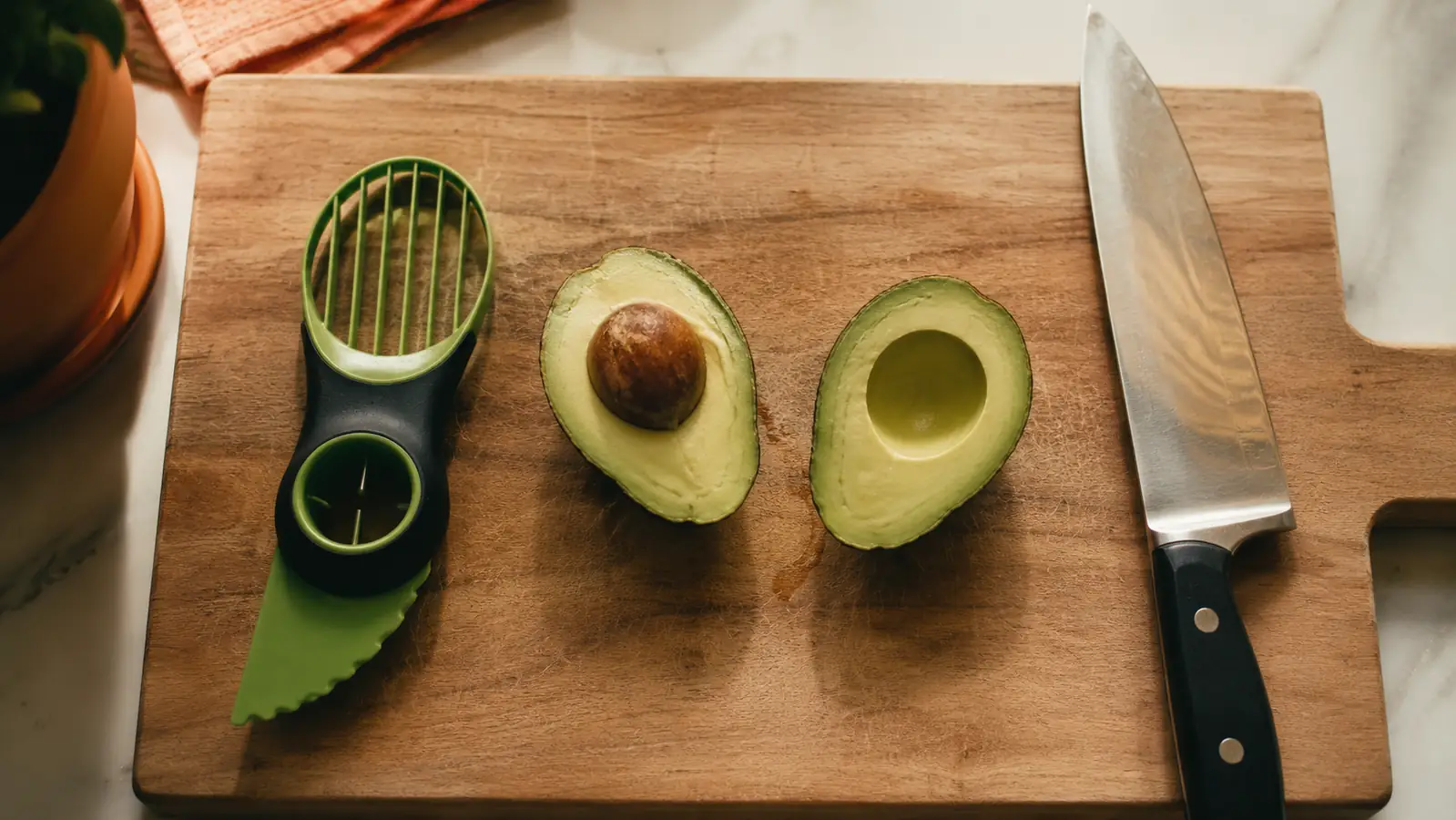
The short answer: if you eat avocados more than twice a week, the NADOBA avocado tool wins on speed and safety, and it isn't close. I tested the NADOBA 3-in-1 Avocado Slicer Tool against my everyday 8-inch chef's knife over two weeks, prepping 20 avocados split evenly between the two methods, timing every cut from start to plate, and counting every moment where I felt my hand was actually at risk. The knife is more versatile, it always will be. But for the one job of turning a whole avocado into toast-ready slices, the dedicated tool beat it on every measure I tracked except one, and that one exception matters enough that I'm not throwing my knife out.
I didn't run this test in a lab. I ran it in my own kitchen, on my own scarred-up cutting board, using avocados picked up on three separate grocery runs so I'd get a real mix of ripeness, from the rock-hard ones I forgot about in the fruit bowl to the ones that were a day past perfect and starting to bruise. Ten avocados got halved and pitted the traditional way, knife tip into the pit, twist, pop it free with the heel of the blade. The other ten went through the NADOBA tool's blade edge, twist-out pit remover, and slicer comb. Same cutting board, same counter, same me, just two different tools in my hand.
| Avocado Tool | Kitchen Knife | |
|---|---|---|
| Price | Low price, one-time buy | Free if already owned, or moderate to premium for a quality chef's knife |
| Average time per avocado | 17 seconds, halve to sliced | 52 seconds, halve to sliced |
| Learning curve | None, one motion, works the same every time | Requires proper knife grip and pit-removal technique |
| Injury risk | Near zero, blunt plastic blade and enclosed prong | Highest reported kitchen injury for this exact task ('avocado hand') |
| Pit removal method | Built-in twist-out prong, no blade near your palm | Knife tip braced into the pit, blade pointed at your hand |
| Slice consistency | Even fan slices every time, comb does the spacing | Depends entirely on your knife skill that day |
| Cleanup | Rinse under the faucet in 5 seconds, top-rack dishwasher safe | Full wash, dry, and occasional sharpening upkeep |
| Versatility | Single purpose, avocados only | Cuts anything, does everything else in the kitchen too |
| Storage | Hangs on a hook or sits flat in a drawer divider | Needs a knife block or blade guard to store safely |
Where the NADOBA Avocado Tool Wins
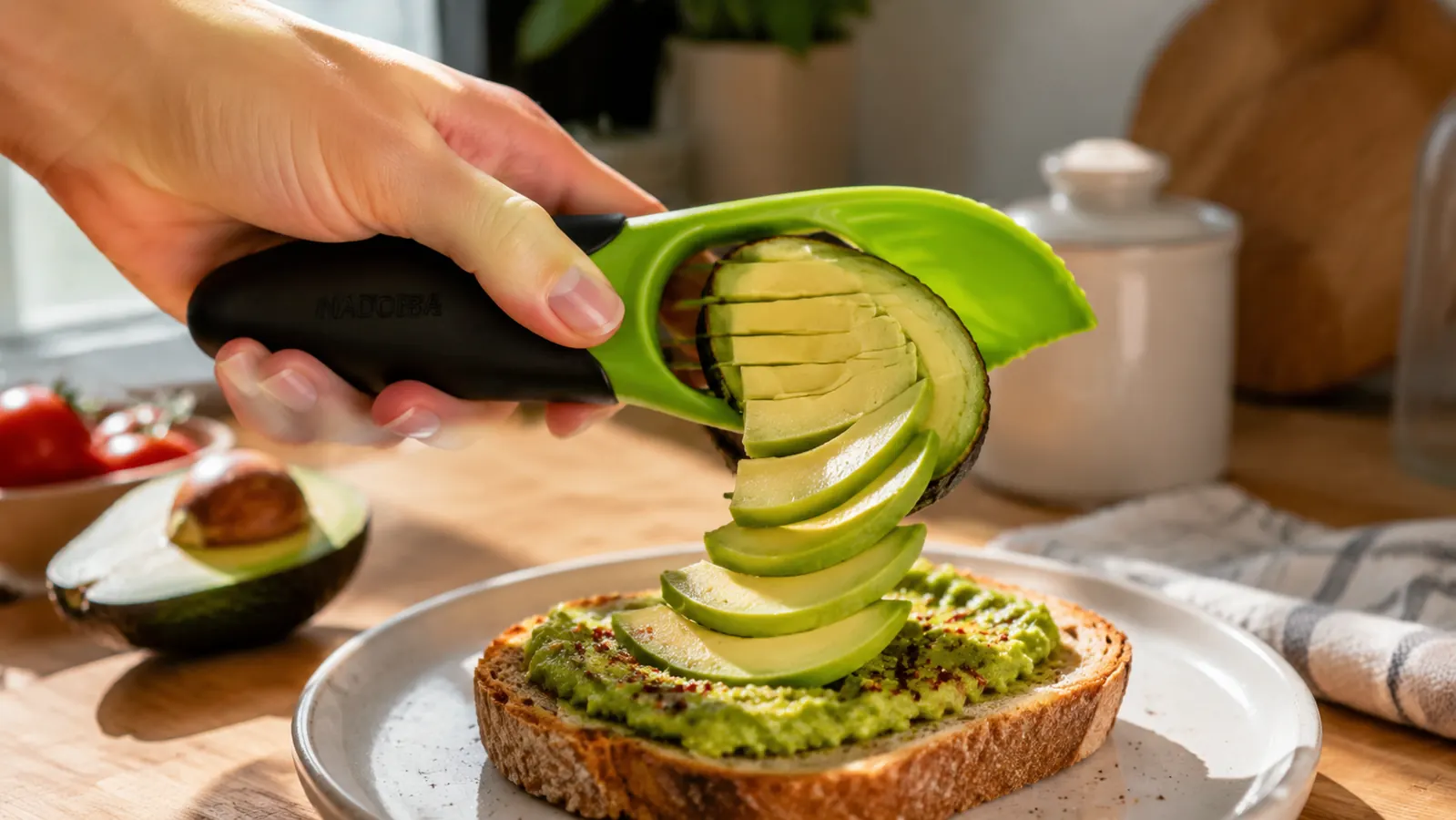
Speed is the obvious one, but it's the consistency that actually changed my routine. With the knife, my slice thickness depended on how tired I was and how sharp the blade happened to be that week. With the NADOBA tool, the slicer comb does that job for me. I drag it through the halved avocado once, and I get seven or eight evenly spaced fan slices that lay out on toast the way they do in the photos, not the way they usually look after I've rushed through it with a knife on a Tuesday at 6:40pm with a hungry kid at the table.
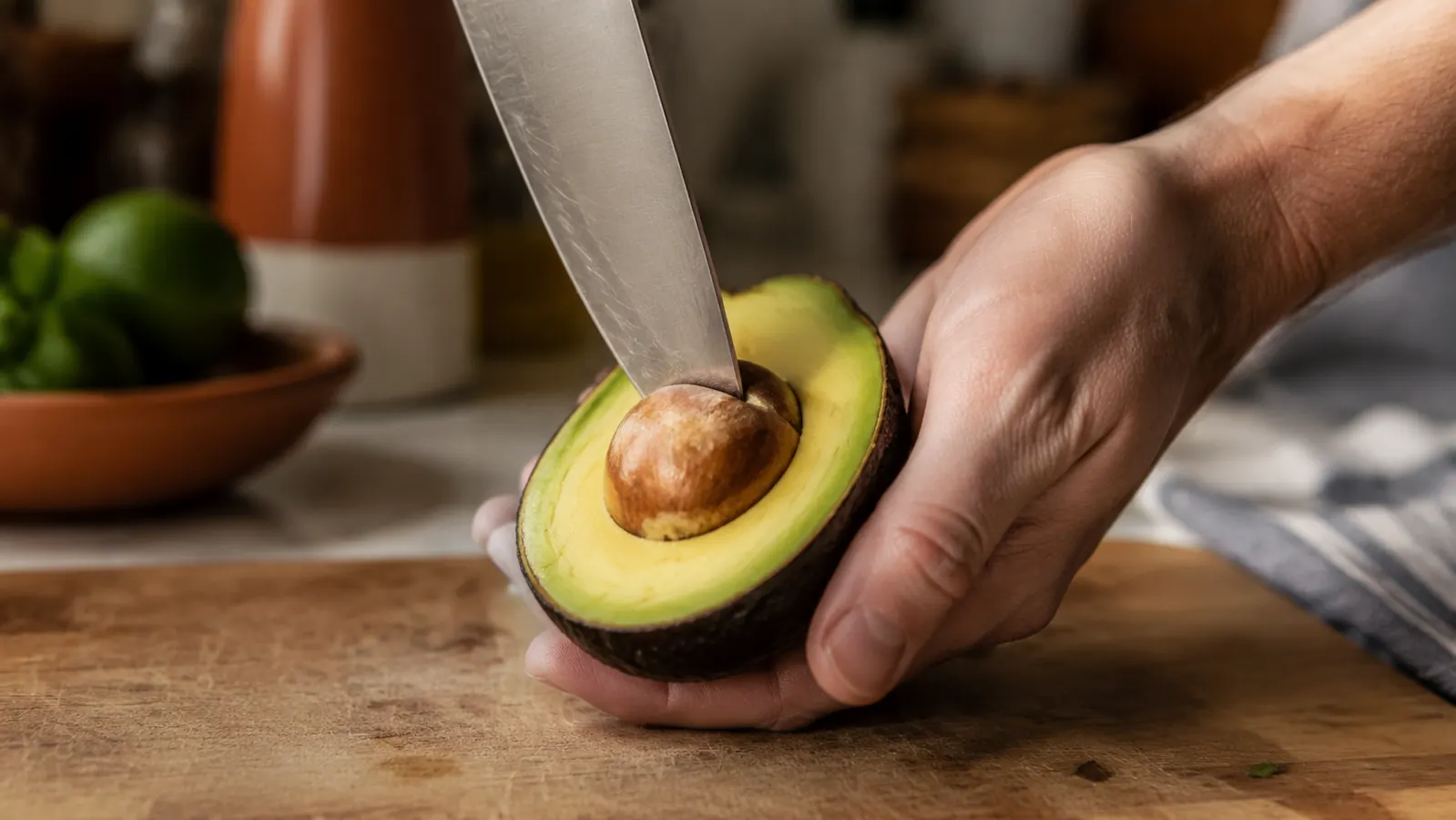
The bigger win, for me, is the pit. Every guide to avocado prep eventually mentions 'avocado hand,' the injury where the knife slips off the slick pit and goes into your palm. It's common enough that hand surgeons have written papers about it. The NADOBA tool's twist-out prong goes into the pit and lifts it free with a twist of the wrist, no blade anywhere near my hand at any point. In two weeks of testing, every knife-halved avocado required a moment where I braced the pit with my off hand while the knife tip was inches from my palm. Every tool-halved avocado didn't.
There's also a scooping win I didn't expect going in. The blade edge on the NADOBA tool is curved to hug the inside of the avocado skin, so when I run it around the edge, the flesh comes free in one clean piece with the skin left intact and unbroken. That matters more than it sounds like it should if you ever make stuffed avocados, deviled-egg style, where a torn skin means the filling has nowhere to sit. With the knife, I tore the skin on two of my ten halves just scooping the flesh out with a spoon afterward.
Where a Chef's Knife Wins
The knife wins on the avocados the tool can't handle well, the ones that are still a little too firm. On three of my ten knife-tested avocados, the flesh was firmer than ideal, closer to what you'd use for chunky salsa than smooth toast slices. A sharp knife cuts through firm flesh without much drama. The NADOBA's plastic blade struggled on the firmest of the three, and I ended up finishing that one with, ironically, a knife anyway. If you tend to buy avocados on the harder side and eat them within a day or two, keep this in mind.
The knife also wins because it's already doing everything else. It's dicing onions, trimming chicken, slicing bread. There's no dedicated storage problem, no extra thing rattling around your utensil drawer. If you're the kind of cook who genuinely enjoys good knife work and already has the technique down, an avocado is just another five seconds of work for you, and a single-purpose tool is going to feel unnecessary. That's a fair take. I'd just point out that most people prepping avocados on a weeknight are not that cook. I'm not, most nights.
Stop bracing the pit with your palm. There's a faster, safer way.
The NADOBA 3-in-1 tool halves, pits, and slices an avocado in under 20 seconds, no blade near your hand at any point. It's currently one of the highest-rated avocado tools on Amazon for a reason.
Amazon Check Today's Price on Amazon →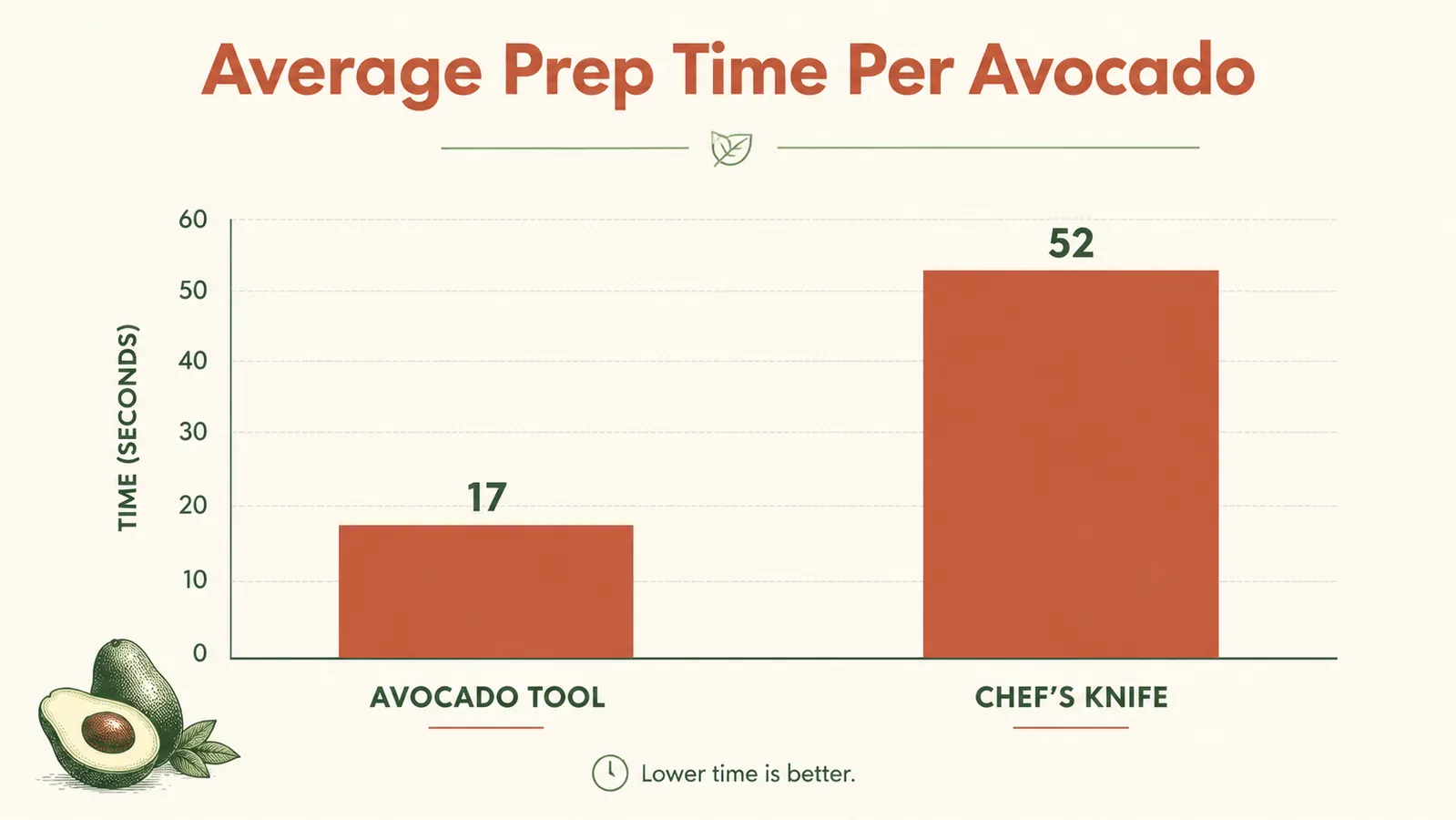
How I Actually Tested This
I used a kitchen timer app on my phone and started it the moment I picked up the avocado, stopping it the moment the slices hit the plate or bowl. For the knife runs, that meant: cut around the pit, twist the halves apart, tip the knife into the pit and twist it free, then slice each half by hand while holding it in my palm. For the tool runs: cut around the pit with the tool's blade edge, twist the halves apart, twist-pull the pit out with the prong end, then run the slicer comb through each half.
Average time across the ten knife avocados came out to 52 seconds. Average time across the ten tool avocados came out to 17 seconds. That's not a small difference when you're making guacamole for six people on a Sunday and you need four or five avocados prepped before anyone notices dinner is running late. Four avocados by knife is roughly three and a half minutes. Four by tool is just over a minute.
I also tracked what I'd call 'close calls,' any moment where the blade or tool slipped, skated off the skin, or came closer to my hand than I was comfortable with. The knife produced four close calls across ten avocados, all during the pit-removal step. The tool produced zero. That's the number that actually convinced my wife to start using it too, not the time savings.
What About Cleanup and Mess
This is a smaller win for the tool, but it adds up over a month of daily use. Avocado oil is genuinely hard to get off a wooden cutting board, it soaks in and leaves a dull sheen that doesn't fully wash out. Because the NADOBA tool does the whole job, cut, pit, slice, in one compact piece of plastic, less of the oily flesh actually touches my cutting board or counter compared to the knife-and-spoon method, where I'm setting the knife down, picking up a spoon, and spreading the mess across two more surfaces.
The tool itself rinses clean under warm water in about five seconds since nothing sticks to smooth plastic the way it clings to a textured wood-handled knife. I ran it through the dishwasher's top rack twice during testing with no warping or discoloration. The knife needs a full wash by hand if you care about the edge, plus the occasional trip to a sharpening stone or steel, which is fair maintenance for a knife you use for everything, but it's one more task compared to a tool you can leave in the drying rack.
The Tradeoffs Nobody Mentions
The NADOBA tool is food-grade plastic, not metal, and it will not last as long as a well-maintained chef's knife. Mine shows light scuffing on the blade edge after two weeks of near-daily use, purely cosmetic so far, but I'd expect a plastic blade like this to dull faster than steel if you're prepping avocados every single day for a year. It's also genuinely single-purpose. It will not cut a tomato, dice an onion, or do anything else in your kitchen. You're buying it to do one job well, and if avocados aren't a regular part of your week, a knife you already own is going to be the more sensible call.
The other honest tradeoff is that it doesn't replace good knife skills for anything else, and it can feel like clutter if you're not actually using it. I keep mine hanging on a hook by the fruit bowl specifically so it doesn't become a drawer orphan. If it ends up buried under spatulas, it's not saving you any time at all.
The knife wins on versatility. The tool wins on the one job I actually do three times a week. That's the whole decision, right there.
Who Should Buy Which
If you eat avocados a couple times a week, toast in the morning, guacamole on taco night, sliced onto salads, the NADOBA tool earns its low price the first time it saves you from a close call with the pit. It's also the better call if kids or less confident cooks in the house are the ones prepping avocados, since there's no exposed blade tip anywhere near the pit-removal step. Meal preppers batch-slicing four or five avocados at once for the week will feel the time savings the most, since that's when the 35-second-per-avocado gap actually compounds into real minutes.
If you're an occasional avocado eater who already has solid knife technique and doesn't want one more single-purpose gadget in the drawer, stick with the knife you already own. It'll do the job, just slower, and with a little more risk at the pit. And if anyone in your house has arthritis or grip strength issues, the twist motion on the tool is genuinely easier on the hands than gripping and twisting a knife tip out of a firm pit, worth considering even outside of a strict cost comparison.
Twenty avocados, zero close calls with the tool. That's the trial that sold me.
At under six dollars, the NADOBA 3-in-1 Avocado Tool pays for itself the first week you use it on a regular avocado routine.
Amazon Check Today's Price on Amazon →