
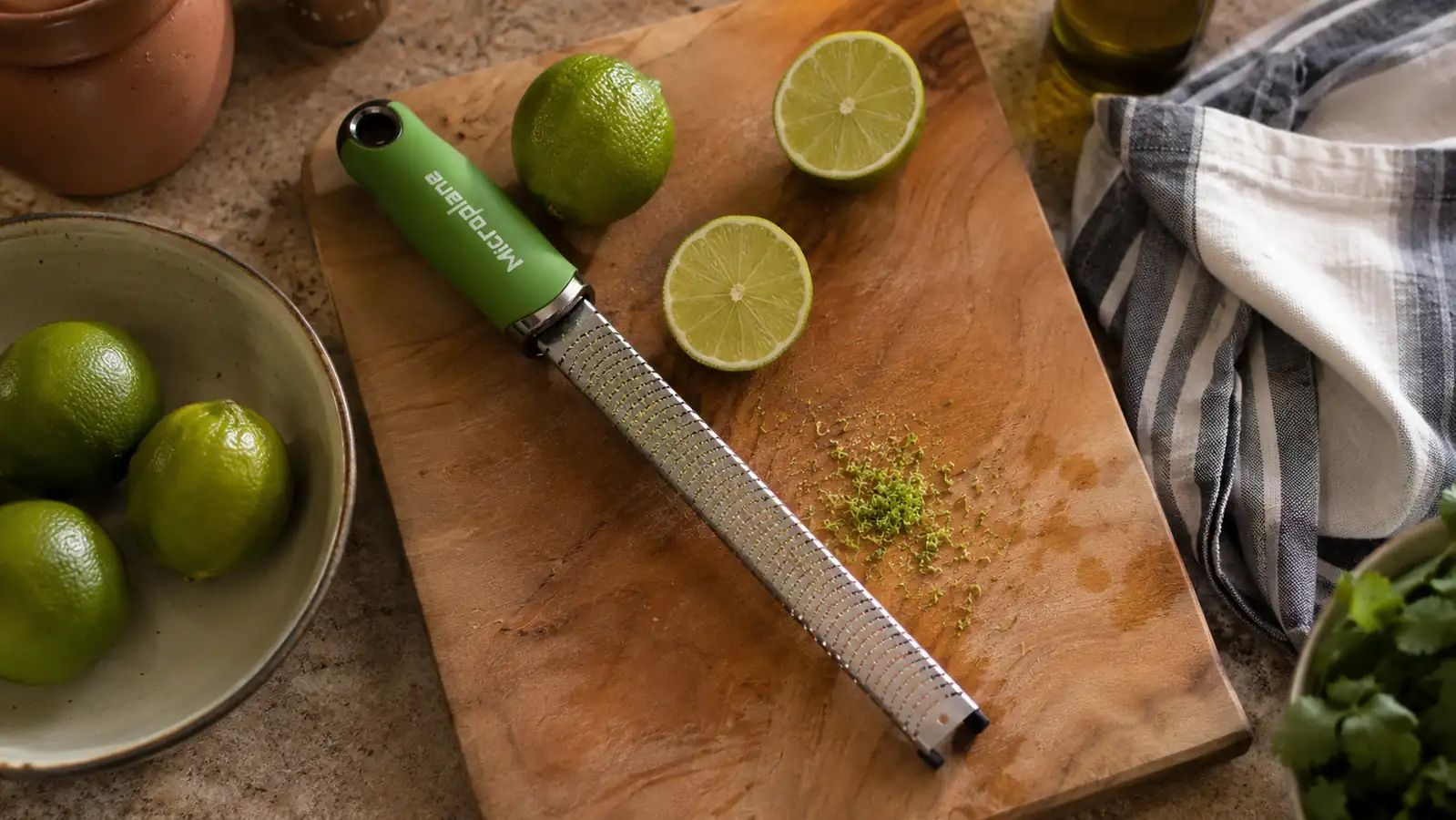
For the first six months I owned a Microplane, I used it for exactly one thing: lime zest on Friday taco night. It lived in the utensil drawer, wedged between a melon baller I've used twice and a garlic press I don't trust, and it only came out once a week. That changed in February, when I moved it out of the drawer and into the crock next to my stove, right alongside the wooden spoons and the fish spatula. Five months and roughly 140 dinners later, it hasn't gone back.
I'm not a chef. I'm a weeknight cook feeding a family of four, three of us picky in different directions, on a rotation of maybe twenty recipes I can make with my eyes half closed. The Microplane Premium Classic, the green-handled one with the lime and parmesan graphics on the box, is an affordable tool I bought mostly to zest citrus for a specific lemon bar recipe. What I didn't expect was how often I'd reach for it for things that had nothing to do with zest at all: parmesan over pasta four nights a week, fresh ginger into stir-fry, whole nutmeg into bechamel, garlic into salad dressing when I don't want big chunks.
The Quick Verdict
A budget tool that earned a permanent spot on my counter. Sharper and more versatile than a box grater, but the blade demands real respect.
Amazon Check Today's Price →Stop dragging out the box grater for a pinch of parmesan.
The Microplane Premium Classic zests citrus, grates hard cheese into a fine snow, and doubles for garlic, ginger, and nutmeg, all with one blade. It's affordably priced on Amazon.
Amazon Check Today's Price on Amazon →How I've Used It
I didn't set out to write a review when I started using this thing daily. I just noticed, sometime around week three of keeping it on the counter instead of in the drawer, that I'd picked it up more times that week than I'd used my garlic press in the previous year. So I started paying attention. For the last five months, it's touched dinner more nights than not: parmesan over pasta or risotto, lime or lemon zest into marinades and dressings, fresh ginger into stir-fry sauce, whole nutmeg into white sauce for lasagna, and, more than once, a bar of dark chocolate shaved over ice cream when my daughter asked for 'the fancy kind.'
It's gone through the dishwasher's top rack probably three times a week, which the packaging says is fine, and I've hand-washed it the rest of the time because I'm usually standing right at the sink anyway when I'm done with it. I keep it blade-down in a wooden crock with my other most-used tools, which means it's within arm's reach of the stove, the cutting board, and the pasta bowl at the same time. That placement alone changed how often I used it. A tool in a drawer gets used for its one job. A tool on the counter gets used for anything it's plausibly good at.
The one habit I had to build was drying it immediately after hand-washing. The teeth are fine enough that a wet blade left in the sink overnight can start to show faint surface spotting near the tips, more from mineral buildup in our hard water than actual rust, but it's the one piece of maintenance this tool actually asks for. Fifteen seconds with a dish towel and it's a non-issue.
The Blade Geometry Is the Whole Story
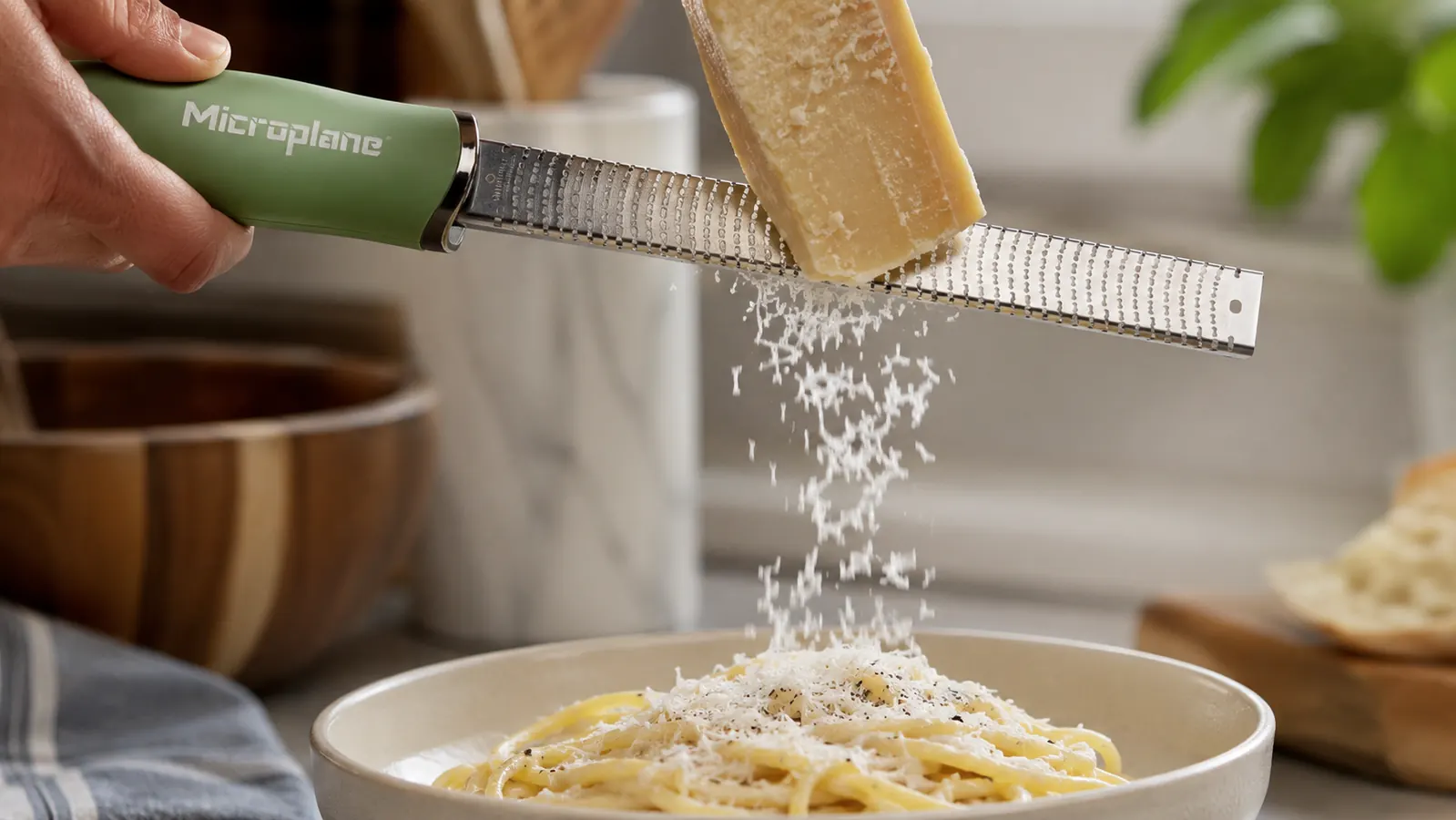
The reason a Microplane feels so different from a box grater or a cheap zester from a gadget aisle comes down to how the blade is made. It's photo-etched stainless steel, not stamped like most budget graters. Stamping punches holes through metal and leaves a rough, dull edge behind. Etching chemically dissolves metal away in a precise pattern, which leaves hundreds of individually angled, razor-sharp teeth instead of one rough one. The practical result is that a Microplane shaves through zest, cheese, or ginger instead of tearing it, which matters more than it sounds like it should.
On a lime, that means I get the colored zest and almost none of the white pith underneath, which is the bitter part everyone's trying to avoid. On parmesan, it means I get a fine, fluffy snow that melts into hot pasta instead of the clumpy shards a box grater produces. I noticed the difference most clearly the first time I zested a lemon for a dessert recipe side by side with my old box grater, which I dug out of the cabinet just to compare. The box grater took twice as long, pulled up visible white pith in three or four spots, and left my knuckles closer to the blade than I liked. The Microplane finished in under twenty seconds with clean, fragrant zest and pith left almost entirely untouched on the fruit.
The blade is also narrower and longer than most graters, about 12 inches from tip to handle, which lets you work it in long, smooth strokes rather than the short scraping motion a box grater forces. That length is part of why it feels more like using a good knife than using a kitchen gadget. It's also, frankly, part of why it's dangerous if you get lazy with it, something I'll get to.
Five Months of Nightly Use: What Changed
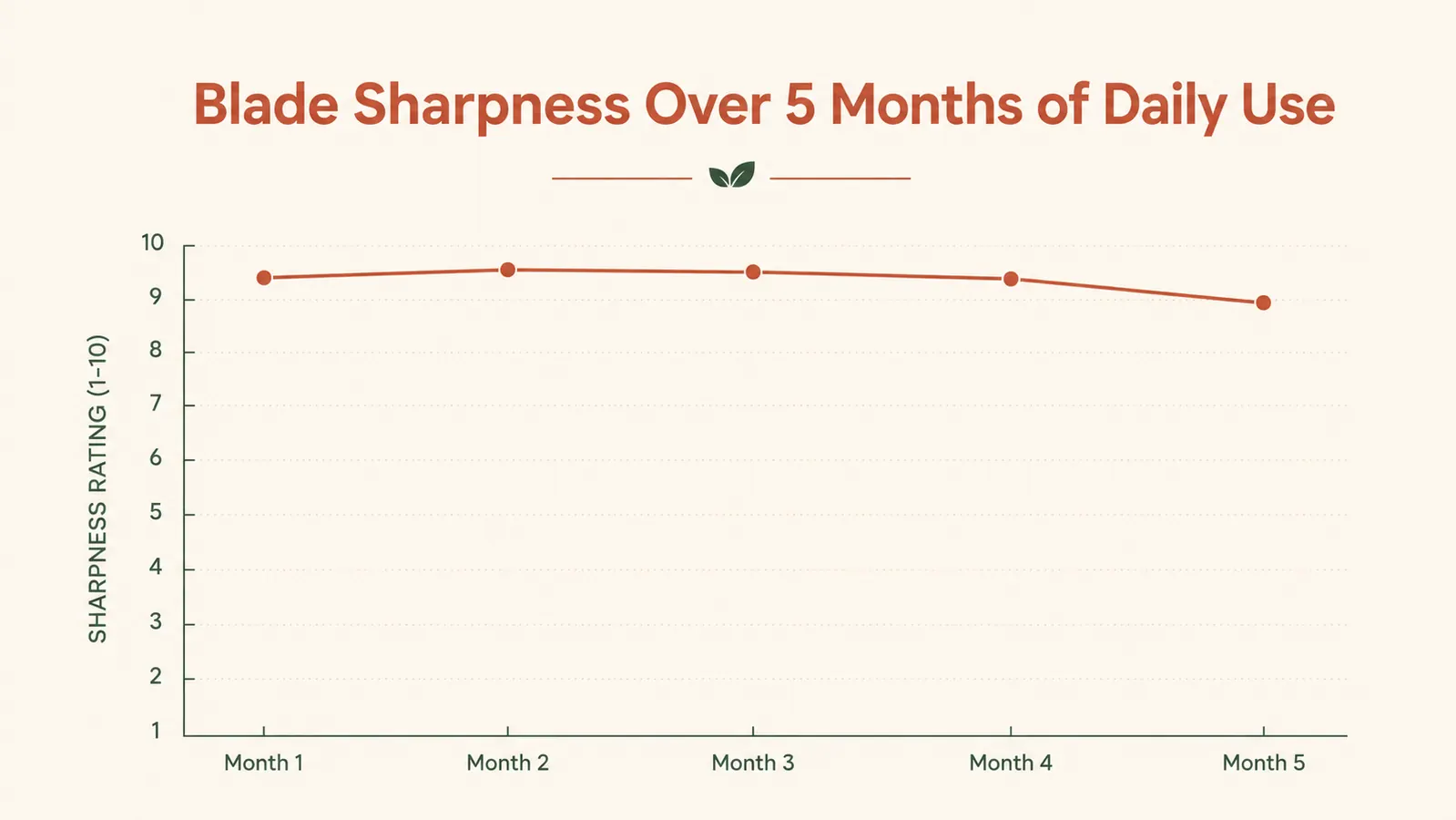
The single biggest thing I wanted to know before writing this was whether the blade would still be sharp after months of real use, not the gentle once-a-week use most reviews are based on. At five months and somewhere north of 140 dinners, it's still doing the job it did on day one. Zest still comes off in fine curls instead of ragged scraps. Parmesan still turns to snow instead of clumping. I genuinely can't feel a meaningful dulling when I compare it to how it performed in February, and I was ready to notice one.
What has changed is the handle. The soft-touch green grip has a faint sheen now from months of wet hands, and there's a small scuff near the base where it's knocked against the side of my sink more than once. Cosmetic, not functional. The plastic end cap that covers the blade for storage has also gotten loose. It still snaps on, but it pops off more easily than it did when the tool was new, which means I've had it fall off in a drawer twice and had to fish around carefully to find it without slicing my fingers open.
The one real incident happened in month three, on a Tuesday, grating parmesan too fast while half-watching my son's homework across the counter. I caught the edge of my knuckle on the last stroke, not deep, no stitches, but enough to draw blood and enough to remind me that this blade doesn't distinguish between cheese and skin. It was entirely my fault, not the tool's, but I mention it because every long-term Microplane owner I've talked to since has a version of the same story. This is not a gadget you use on autopilot.
What It's Actually Good At Beyond Zest
If I only used this for citrus zest, it would be a nice-to-have, not a daily tool. What earned it a permanent spot in the crock is everything else it quietly replaced. Parmesan is the biggest one. I used to keep a bag of pre-shredded cheese in the fridge because grating a wedge with a box grater felt like too much effort for a Tuesday. Now I keep a chunk of real parmesan and grate what I need in under a minute, which tastes noticeably better and melts more evenly into hot pasta than the pre-shredded stuff ever did.
Garlic is the second big one. Instead of mincing with a knife or fighting with a garlic press that leaves half the clove stuck inside it, I run a peeled clove across the Microplane straight into the pan or the dressing bowl. It turns into a near-paste in a few strokes, which distributes more evenly through a vinaigrette than chopped garlic does. Fresh ginger works the same way for stir-fry sauce, ready in seconds with none of the stringy fiber you get from a box grater. Whole nutmeg for bechamel and eggnog is another one I didn't expect to love. Pre-ground nutmeg loses its punch within weeks of opening the jar, but grating whole nutmeg fresh over the pot smells like a completely different spice.
It's also become the tool I reach for with frozen butter when I'm making biscuits or pie crust, since grating cold butter into flour keeps it colder longer than cutting it in with a pastry blender, which means flakier layers. And more than once, on a night when dessert plans fell through, I've shaved a bar of dark chocolate over vanilla ice cream and called it fancy. It works.
Where It Falls Short
The blade that makes this tool great is also its biggest limitation. It's genuinely sharp enough to open skin if you're not paying attention, and there's no guard between your hand and the working edge the way there is on a box grater. If you've got young kids who like to help in the kitchen, this isn't a tool you hand over without close supervision, and even then I'd think twice.
It's also strictly a one-job-at-a-time tool. It doesn't shred a block of cheddar for tacos the way a box grater does, since the surface area is too narrow and the strokes are too slow for high volume. If I need a cup and a half of shredded cheese for enchiladas, I'm still pulling out the box grater. And the plastic end cap, as I mentioned, loosens with use. It's a minor annoyance, but Microplane could have made it snap on more securely given how sharp the thing is when uncapped.
Last thing worth flagging: if you leave it wet in the sink overnight more than a couple times, you'll start to see faint spotting near the blade tips. It wipes off with a little scrubbing, but it's a reminder that this is a tool that rewards being dried and put away, not left to soak.

What I Considered Instead
Before settling on the Microplane, I looked at a couple of no-name zesters on Amazon that ran half the price, and I also seriously considered just sticking with the box grater I already owned. I wrote up the full comparison separately, including where a box grater still wins, but the short version is that the cheaper zesters I tried at a friend's house felt noticeably duller out of the box and didn't hold an edge the way this one has. The box grater is still the right call for high-volume shredding, but for the fine work, zest, hard cheese, garlic, ginger, nutmeg, this one's the tool that's earned its counter spot. If you want the fuller list of everything it upgraded in my cooking, I put together ten specific ways it changed how I cook.
What I Liked
- Etched stainless blade shaves zest clean off the pith instead of tearing it
- Turns hard parmesan into fine snow in under a minute
- Doubles for garlic, ginger, nutmeg, and cold butter, not just citrus
- Held its edge with barely any noticeable dulling after 5 months of near-daily use
- Dishwasher safe and easy to store flat in a drawer or crock
- Comfortable non-slip handle even with wet hands
Where It Falls Short
- The blade is genuinely dangerous if you get careless, no guard between your hand and the edge
- Plastic end cap loosens over time and can pop off in a drawer
- Too slow and narrow for high-volume shredding like a block of cheddar for tacos
- Can develop faint mineral spotting near the blade tips if left wet in the sink
It caught my knuckle in month three, not because it's a bad tool, but because I stopped respecting how sharp it actually is.
Who This Is For
If you cook real dinners most nights, use fresh citrus, garlic, or hard cheese more than occasionally, and you're tired of the clumpy results a box grater gives you, this earns a spot on your counter fast. It's especially worth it if you bake, since fresh nutmeg and cold-grated butter are two upgrades you notice immediately.
Who Should Skip It
If you rarely cook with fresh citrus or hard cheese, or if you need a tool for high-volume shredding more than fine zesting, a box grater or a food processor attachment will serve you better. And if you've got young kids underfoot in the kitchen constantly, the unguarded blade is worth thinking hard about before it lands in a low drawer.
Five months, 140-plus dinners, still sharp.
The Microplane Premium Classic handles citrus zest, parmesan, garlic, ginger, and nutmeg with one blade that's held its edge through daily use. It's affordably priced on Amazon.
Amazon Check Today's Price on Amazon →